CBRNE Triangle Project (2008 - 2030)
Civil preparedness for war - if deterrence fails
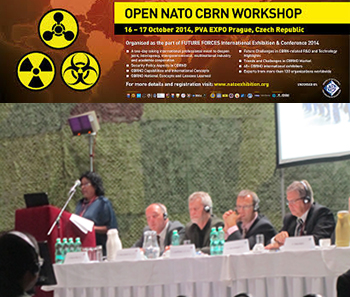
Speaker Presentation at NATO CBRN workshop - 2014
Prague, Czech Republic
CBRNE Triangle Project is an important part of the EQQUERA counter-UAV and drone warfare deterrence strategy. The project is invented and designed for civil preparedness for war - if deterrence fails and a chemical, biological, radiological, and nuclear crisis occurs.
Civil preparedness for war is a powerful deterrent strategy toward adversaries and enemies - when a country demonstrates that its society, governance, and infrastructure can withstand and quickly recover from a crisis. This message directly points to adversaries that hostile actions will not achieve their disruptive military objectives.
NATO warns the West and allies to be immediately prepared for possible war in 2027-2035
Russia’s invasion of Ukraine in February 2022 and ongoing military activities in the Middle East are already bringing the world closer to the possibility of a global nuclear catastrophe. US and NATO top military officials warned that the world would face all-out war in the next two decades and should prepare for possible nuclear or WMD conflict in 2027, which has already reached a breaking point during the summer of 2025.
On July 12, 2023, the Russian President warned, "The latest NATO summit demonstrates that the Western and NATO military alliance has returned to 'Cold War schemes' and Moscow is ready to respond to such threats by 'all means' necessary" (Ref: Credit: Reuters July 12, 2023). This includes the use of nuclear and other weapons of mass destruction (WMD) against Europe and the West.
Moreover, on February 29, 2024, the Russian president assured in his annual State of the Nation address that "if the West sent their troops to fight Ukraine, Moscow might strike Western countries with nuclear weapons”.
In response to these threats NATO and its allies said, Russia's nuclear rhetoric is dangerous, and if Russia uses nuclear weapons, NATO and allies will use their nuclear weapons against Russia. (Ref: NATO - Conversation NATO Secretary General at the Council on Foreign Relations)On July 2025, NATO’s top commander in Europe, Alexus Grinkevich says: The US and EU have 18 months to prepare for a global war with China and Russia.
On August 27, 2026, news: “Russia warned Thursday that it could strike British military targets inside and outside Ukraine if Kyiv uses long-range British cruise missiles against targets deep inside Russian territory, according to reports.” (Ref: Fox News)
The CBRN Triangle Project 2008-2030 - Civil preparedness for war
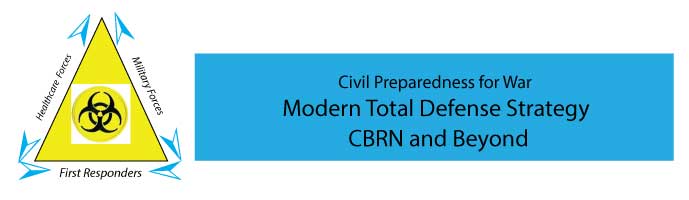
Invention of Color-coded distinctive Identification and visual communication (CIVC) system
The CBRNE Triangle Project is a unique Color-coded distinctive Identification and visual communication (CIVC) system developed alongside EQQUERA's technological innovation of UAVs and drone warfare system architecture.
The core mission of the project is to distinguish law enforcement and other emergency responders so that they can build a safe and effective work environment - to save lives, protect property, and mitigate hazards - if deterrence fails and a Weapons of Mass Destruction (WMD) chemical, biological, radiological, and nuclear crisis occurs.
First introduced - the 2010 Vancouver Winter Olympics in Canada
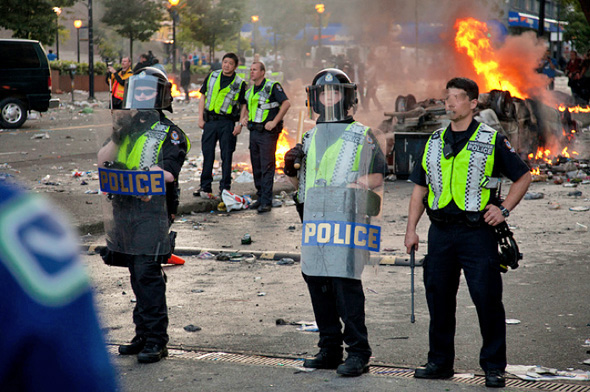
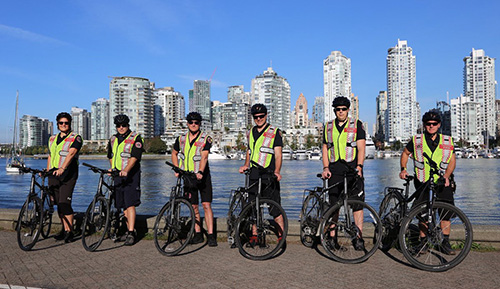
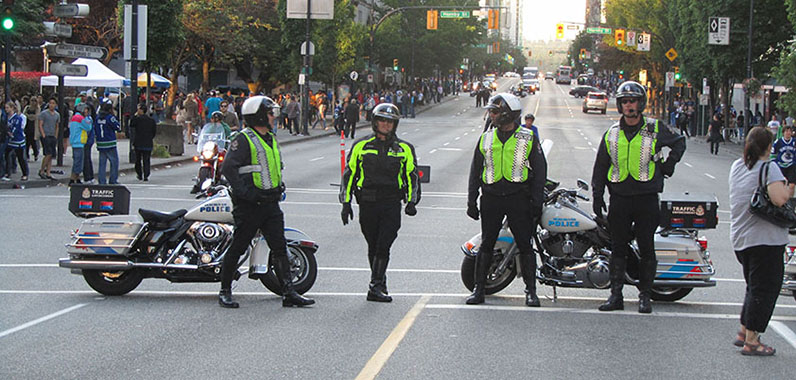
We first introduced the "CBRNE Triangle Project" to law enforcement personnel during the 2010 Vancouver Winter Olympics in Canada under an associate company. The project is now integrated into "modern total defense" - civil preparedness and warfare strategies to save lives and protect properties from weapons of mass destruction (WMD) events.
Government agencies amendments
WorkSafe BC and Canada Occupational Health and Safety Regulations
This color-coded identification system received government agency approvals (WorkSafeBC) following two public hearings. Thereafter, the identification system was subsequently amended into the Canada Occupational Health and Safety Regulations Act 8.24, under provincial occupational health and safety regulations, which stated, "distinguishing emergency medical assistant or in any other capacity, as well as law enforcement, defined in the Police Act." ( WorkSafeBC 8.24 High visibility apparel Act. Subsection (3) (b) (i, ii, iii) and (c).)
March 2022 Canadian Standards Association (CSA) amendments
CSA Z96:22 High visibility safety appareel 3 - 3.1 and Notes (1) and (2) - "Emergency and insident responders, and law enforcement personnel - any emergency professional who is assigned to respond and be first on the scene of a disaster, incident, or the threat to public security, an individual, who, in the early stages of an incident, is responsible for the protection and preservation of life, property, evidence and the environment."
Our Mission - Civil preparedness for war
The United States and Canada's modern total defense posture for CBRNE deterrence
The United States and Canada's modern total defense posture for Chemical, Biological, Radiological, Nuclear, and Explosives (CBRNE) threats relies on integrated, all-hazards frameworks and binational civil-military coordination.
The United States: National Strategy for Chemical, Biological, Radiological, Nuclear, and Explosives (CBRNE) Standards.
Canada strategy: Chemical, Biological, Radiological and Nuclear and Explosives Resilience Strategy and Action Plan for Canada.
About civil preparedness for war - Modern total defense strategy
Modern total defense is a key pillar of civil preparedness for war - this is a national security strategy that mobilizes an entire country, which integrates society as one connected, interoperable workforce and network—military forces, first responders, emergency services, healthcare providers, civilian government agencies, private businesses, and individual citizens. This connectivity is vital during Chemical, Biological, Radiological, and Nuclear (CBRN) defense crises or wars - to prepare for and respond to coordinate life-saving responses.
The medical collapse plays a major role in crises - hospitals and first responders (law enforcement, medical, fire-rescue) would quickly be overwhelmed by severe radiation sickness or chemical contamination and chemical exposure.
A single nuclear weapon or large-scale biological, radiological, and chemical release can kill hundreds or thousands of civilians in seconds - creating multiple crises - and crises long after deployment.
The medical collapse plays a major role in crises - hospitals and first responders (law enforcement, medical, fire-rescue are quickly overwhelmed by severe radiation sickness or chemical contamination and chemical exposure.
WMD crises fundamentally differ from conventional humanitarian crises
Weapons of Mass Destruction crises fundamentally differ from conventional humanitarian crises because of their nature, sudden devastation, and the aftermath of CBRN events.
Large-scale biological/chemical/nuclear release can kill hundreds of thousands of civilians instantly - and thousands need complex immediate medical assistance. Fire and rescue services focus on saving lives, controlling hazard containment, mass decontamination, and incident stabilization, including direct property protection.
CBRNE Triangle Project
The key focus of the CBRNE Triangle Project is to build interoperability of multi-agency "joint forces" - law enforcement, medical, fire and rescue, military, sheriff services, border services, and other emergency and health care workers to coordinate and work together in the event of a CBRNE catastrophe or war situation, to save themselves and to save public lives and properties.
The modern total defense against a weapon of mass destruction (WMD) detonation
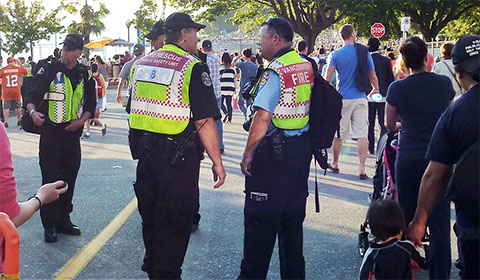
The CBRNE Triangle Project is designed to distinguish first responders (law enforcement, fire and rescue, medical and paramedics), other emergency responders (military, sheriff, border service, CBRN personnel), and frontline workers (hospital and field healthcare workers) from other workers and the general public.
The project also includes distinctive identification and a visual communication system that will enhance communication among the military and all emergency responders during a crisis when standard communication systems malfunction.
The immediate aftermath of a CBRNE tragedy triggers massive displacement, a chaotic environment, severe health crises, large-scale help for survivors, and urgent rescue plans for infected survivors. The most complex issue of WMD warfare is the separation of the danger zone - clean area from affected areas to control the spread of germs and radiation. They are split into well-established zones: hot (Red), warm (Yellow), and cold (Green), to manage danger and protect people.
Global War Preparation for nuclear threats
The U.S. briefed Congress and other allies, including Canada, about the Russian nuclear threat
The U.S. briefed Congress and all other allies, including Canada, about the Russian nuclear threat. (CBC News). April 10, 2024, the U.S. Commander of U.S. European Command testified before the U.S . House Armed Services Committee, "Russia Is a 'Chronic Threat' to World".
Canada Preparing for war
Canada's Defense Minister insists that Canada is aggressively preparing to face evolving global nuclear threats, and Canada and its allies must be ready for "all scenarios" when it comes to whether Russia could deploy nuclear weapons amid its "failure" in Ukraine.
The federal government is also strengthening Canada's emergency "preparedness and response" plan for a catastrophic nuclear event. These action plans include preparation for possible CBRNE (chemical, biological, radiological, nuclear, and explosive) attacks during conflicts.
Due to ongoing direct nuclear threats, the Canadian federal government is presently strengthening Canada’s emergency preparedness and response plans for a catastrophic nuclear event. "Ottawa was also taking steps to finalize a protocol for advising the Canadian public of an incoming ballistic missile", according to the notes obtained by The Canadian Press under the Access to Information Act.
"Time is running out for Canada and the West to rearm sufficiently to deter Chinese and Russian aggression. If we don’t, then the conditions that could motivate those countries to engage in large-scale international warfare could occur within the next three to five years" - Brigadier General Brendan Cook, the Royal Canadian Air Force (Ref-Credit: SpaceQ)
UK Preparing for war
On January 24, 2024, British Army Chief General Patrick Sanders called on British authorities to mobilize the nation in preparation for a massive war massive war with Russia (Credit: Euro News). The Army Chief also said people in Britain should be ready to serve in the military in the event of a war with Russia (Credit: BBC News). UK government also requested the military to be armed and ready, including upgrading the "Kamikaze drones" and nuclear warhead capabilities for future wars. (Credit: UK The Sun)
Germany preparing for war
German Defense Minister warns citizens to prepare for a massive war with Russia. At the same time, to preempt or deter a possible nuclear strike.
Sweden's commander-in-chief General Micael Bydén similarly called on Swedes to prepare for war.
UN General Assembly Resolution - 2025
In July 2025, the United Nations Secretary-General announced, “ The establishment of this 21-member Panel, at the behest of a General Assembly resolution, is a response to a global environment in which the risk of nuclear war is higher than at any point since the depths of the Cold War. Nuclear weapons are wielded as tools of coercion, nuclear arsenals are being upgraded. A nuclear arms race is once again a very real possibility. The guardrails against nuclear devastation are being eroded.” (Ref: United Nations - announcement)
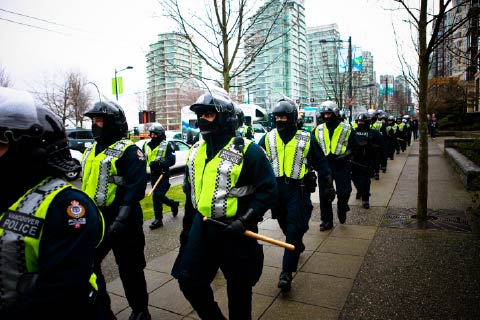
Vancouver 2010 Winter Olympics - Canada
Project Milestone 2008 -2021
Civil Preparedness and Response Plan - If Deterrence Fails and a CBRNE Event Occurs
2008– Initiated comprehensive research on civil preparedness and emergency response plans to protect and build interoperability for multi-agency "joint forces" - first responders, other emergency responders, essential services, and military in the event of a CBRN (chemical, biological, radiological, nuclear, and explosive) crisis so that they can protect themselves to protect the public and save lives and infrastructure.
2009 - Developed a Color-Coded distinctive Identification and Visual Communication System (Color-Coded IVC System) based on the completion of 2008 research. The project focused on contributing to building an effective workforce and safe work environment for law enforcement and other emergency responders during the 2010 Vancouver Winter Olympics.
2010 - The Color-Coded IVC System was introduced to British Columbia law enforcement during the 2010 Vancouver Winter Olympics.
2011 - The Color-Coded IVC system was introduced nationwide for first responders and other emergency responders.
2012 - Launched the "Safety Awareness Program" and introduced the Color-Coded IVC system to federal, provincial, territorial, municipal, and local governments and their relevant agencies.
2013 - Introduced the Color-Coded IVC System to first responders' communities in Canada and the U.S.
2014 - Speaker presentation at the NATO CBRN Defence Conference, Prague, Czech Republic. The topic presented was Cyber, EMP, and physical attacks on power grids and a distinctive identification system for emergency responders.
2016 - The Color-Coded IVC System awareness program was organized for first responders and other emergency response groups.
2017 - Launched a full-scale implementation plan for the Color-Coded IVC system. The objective was to introduce the Color-Coded IVC system to the CBRNE Security Strategy Plan 2020, and beyond. (U.S. and Canada).
2019 - Submitted the proposal to government agencies for their approvals - WorkSafeBC and CSA (Canadian Standards Association).
2021 - WorkSafeBC approved the distinctive identification system for emergency responders and amended the Canada Occupational Health and Safety Regulations Act 8.24 under provincial occupational health and safety regulation, after two public hearings.
2022 - CSA amended the standard - CSA Z96:22 high visibility safety apparel 3.1 for emergency and incident responders, law enforcement personnel to be distinguished from others.